5 Key Takeaways: SpecSummit 2026
February 25,2026
Category: Packaging Development, Quality Optimization
Insights on specification strategy, sustainability, AI, and enterprise decision support
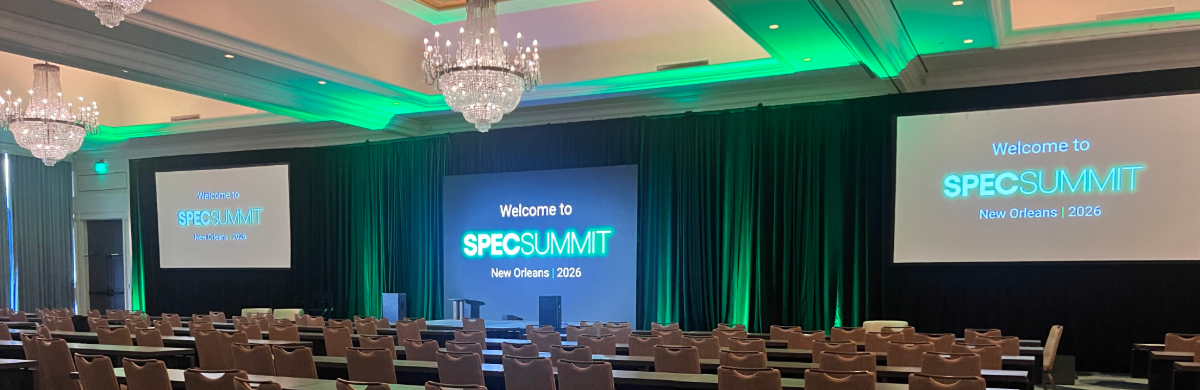
SpecSummit 2026 made one thing clear: specification data is no longer operational back-office infrastructure. It's becoming a strategic decision engine. Across sessions and peer discussions, leaders explored how structural data, AI-enabled workflows, sustainability pressures, and enterprise integration are reshaping how organizations design, source, and govern packaging and product specifications.
Below are five key takeaways shaping the next phase of specification strategy.
AI capabilities were featured prominently in sessions as tools to augment, not replace, expert workflows.
Extended Producser Responsibility, recylcability criteria, and sustainability metrics were woven throughout discussions raher than treated as standalone topics.
Businesses that adopt structured data models, leverage AI judiciously, and enable cross-functional collaboration are gaining better insights into cost, compliance, and sustainability at scale.
At SpecSummit, the message was clear: structured specification data creates opportunity, but only if organizations know how to operationalize it.
That's where Adept comes in.
Our teams work at the intersection fo packaging engineering, compliance, and digital systems to help companies transform specification data into practical, mesurable outcomes. From building governance frameworks and improving data quality to integrating tools, such as AdeptEPR AI, to assist in easier, more manageable EPR reporting. We help organizations move from fragmented information to confident decision making.
Adept partners with teams to design systems that support long-term scalability - not just short-term fixes, ensuring specification strategy becomes a true competitive advantage.
Contact us today.
SpecSummit 2026 made one thing clear: specification data is no longer operational back-office infrastructure. It's becoming a strategic decision engine. Across sessions and peer discussions, leaders explored how structural data, AI-enabled workflows, sustainability pressures, and enterprise integration are reshaping how organizations design, source, and govern packaging and product specifications.
Below are five key takeaways shaping the next phase of specification strategy.
1. Structured Specification Data is Strategic
Speakers consistently framed specification data as a central asset for driving digital transformation.- Organizations that are moving away from decentralized spreadsheets toward governed specification repositories are able to set up faster workflows.
- Structured data enables more reliable cross-functional access and reduces manual effort in compliance reporting and material analysis.
- The shift to data-first processes is helping teams respond quickly to regulatory changes and emerging EPR requirements.
2. AI is Becoming a Practical Tool for Spec Management
AI capabilities were featured prominently in sessions as tools to augment, not replace, expert workflows. - Rather than positioning AI as an abstract future trend, speakers highlighted real use-cases such as automated material classification, natural-language search, pattern detection across specification sets, and reporting.
- Organizations are beginning to leverage AI to reduce time spent on routine tasks, enabling engineers and compliance teams to focus on higher-value analysis and strategy.
- Integrations between AI and specification platforms were discussed as a way to accelerate insight generation without adding new isolated systems.
3. Sustainability and EPR Readiness are Core Drivers
Extended Producser Responsibility, recylcability criteria, and sustainability metrics were woven throughout discussions raher than treated as standalone topics. - Companies are increasingly using specification data to plan for material recyclability and calculate fiscal impacts.
- Sustainability was framed as a requirement that must be addressed early in the specification and design process, and not implemented at the end of development.
- EPR readiness, particularly for multi-state and international markets, is leading teams to build repeatable, data-centric approaches for tracking obligations and fee exposure.
4. Breaking Down Functional Silos Improves Decision Quality
A repeated takeaway was that shared data environments and common governance reduce friction between teams.- Teams that align around a central specification model report faster decision cycles and fewer last-minute redesigns.
- Cross-functional access to high-quality material and component data supports better cost forecasting, compliance planning, and risk assessment.
- Attendees with success stories noted that transparent data flows improve collaboration with vendors and external partners.
5. Simplification and integration are Foundational Stones
Complexity was repeatedly characterized as an impediment to scale.- Integrating structured specification data with broader enterprise systems increase visibility across product lifecycles and reduces manual handoffs.
- Simplified, consistend tat not only reduces operational burden, but also increases confidence in analytics, reporting, and compliance readiness.
Specification as a Decision Engine
Across sessions, workshops, and peer interactions, a unifying theme was that specification systems are evolving beyond record keeping into enterprise decision engines.Businesses that adopt structured data models, leverage AI judiciously, and enable cross-functional collaboration are gaining better insights into cost, compliance, and sustainability at scale.
Turning Insights into Action: How Adept Helps Activate Your Specification Data
At SpecSummit, the message was clear: structured specification data creates opportunity, but only if organizations know how to operationalize it. That's where Adept comes in.
Our teams work at the intersection fo packaging engineering, compliance, and digital systems to help companies transform specification data into practical, mesurable outcomes. From building governance frameworks and improving data quality to integrating tools, such as AdeptEPR AI, to assist in easier, more manageable EPR reporting. We help organizations move from fragmented information to confident decision making.
Adept partners with teams to design systems that support long-term scalability - not just short-term fixes, ensuring specification strategy becomes a true competitive advantage.
Contact us today.
About the Author:
Timothy Waldron, a Senior Packaging Engineer with Adept Group, currently employed in the CPG space, leading sustainability, cost savings, and a new product development (NPD) projects. Tim has years of experience in the medical device space and is knowledgeable in validations and packaging test methods. He is continuously looking to expand his knowledge and assist clients in these spaces.