How EPR Changed Packaging Engineering From Specs to Strategy

March 19,2026
Category: Sustainability
I still remember the moment I realized packaging engineers had become accidental business strategists.
I was working with a global CPG manufacturer whose brands appear in supermarkets nationwide. As EPR legislation rolled out state by state, I began analyzing the numbers, not by request, but out of necessity.
New Jersey's rules were clear: no rPET inclusion in rigid packaging. Millions in potential fines. California took a different approach: a sprawling fee structure that could raise material costs and demand 40% recycle rates across certain pack materials. Oregon had its own calculus.
I built a model to identify which materials cost the business the most under these mandates. This revealed two paths: quick wins through film simplification and down-weighting, a long-term strategy to shape the next decade of our packaging.

EPR Forces two packaging paths: short-term optimization versus long-term resilience
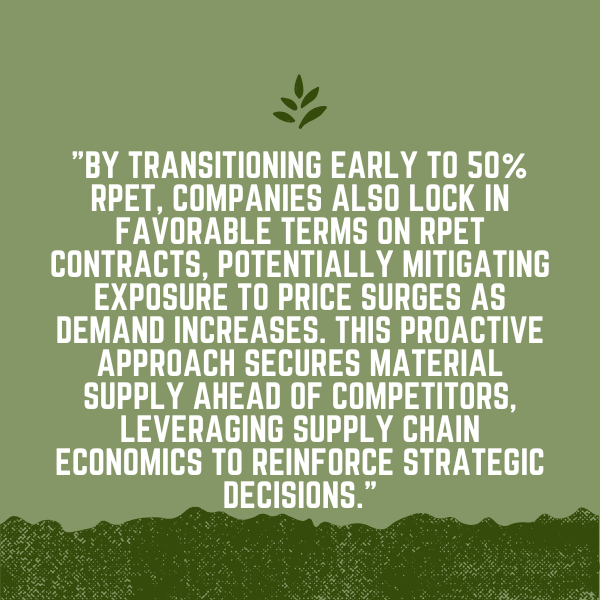
New Jersey's legislation requires 50% rPET inclusion by 2037. While most teams saw this as a distant issue, I recognized a decade-long window where design choices either accrued hidden liabilities or built competitive advantage. Early transition of brand categories to 50% rPET eliminated future exposure and secured material supply ahead of competitors.
That's when it became clear: packaging engineers are making financial decisions, invited or not. We should leverage this fact.
What is Extended Producer Responsibility (EPR) in Packaging?
Extended Producer Responsibility (EPR) is a regulatory framework that makes manufacturers financially responsible for the collection, recycling, and disposal of packaging materials after consumer use. In packaging, EPR laws typically introduce:
- Material specific fees based on recyclability
- Recycled content mandates such as rPET thresholds
- Reporting and compliance requirements
- Financial penalties for non-compliant packaging designs
How EPR is Changing the Role of Packaging Engineers
Extended Producer Responsibility (EPR) laws are fundamentally changing how packaging engineers design products, select materials, and evaluate long-term cost.Because these fees are tied directly to packaging materials, weight, and recyclability, EPR regulations are increasingly influencing how packaging engineers design products and select materials.
EPR holds manufacturers financially responsible for their products' entire life cycles to foster a circular economy, reduce the taxpayer burden, and encourage eco-modulation to minimize environmental impact.
But EPR does more than add compliance costs; it redefines "good" packaging design. Success now means achieving long-term sustainability, resource efficiency, and circularity rather than focusing on short-term performance and upfront costs.
The New Variables Packaging Engineers Must Model Under EPR
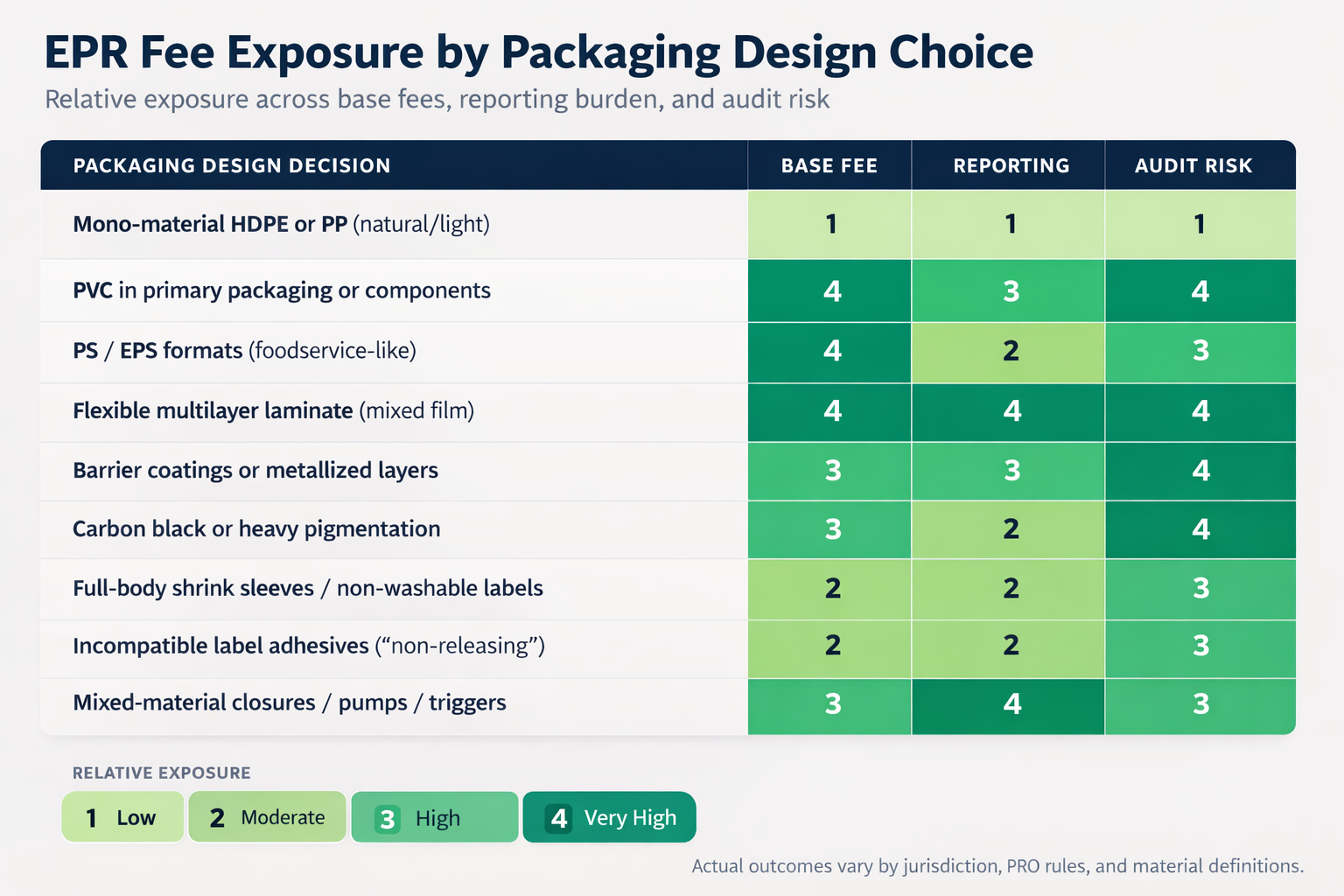
EPR adds complexity that traditional packaging optimization did not address: Material-specific fees vary not only by substrate, but also by how each jurisdiction defines and rates material choices. Compliance varies by state; what's acceptable in one may incur penalties in another. Costs neutral today may face heavy penalties in three years. Recyclability is also becoming more complex, shaped by local infrastructure, material definitions, and evolving legislation. A material approved in one state may incur fees in another, impacting profitability on high-volume SKUs.
Reporting and audit exposure
Every design decision creates a documentation trail. Material declarations, recycled content certifications, and end-of-life projections are not just sustainability points but compliance inputs subject to financial penalties for inaccuracies or non-compliance.
Why Are Cost-Optimized Designs Increasingly Failing When it Comes to EPR?
When business leaders face EPR-driven cost increases, their instinct is to optimize using lower-cost materials and reduce weight, cutting costs wherever possible. However, designs focused mainly on lower costs and reduced weight often fail by prioritizing upfront expenses over total cost of ownership and logistics.
This approach shifts costs downstream, leading to warehouse safety issues, product damage, returns, and loss of brand reputation.
EPR demands a balanced approach that distinguishes strategic packaging engineers from order-takers: combining engineering expertise with holistic fiscal planning to deliver savings without hidden downstream liabilities.
That balance starts with speaking the same language as the business leaders and procurement partners, with whom engineers work most closely.
Where Engineering and Business Decision-Making are Misaligned Under EPR
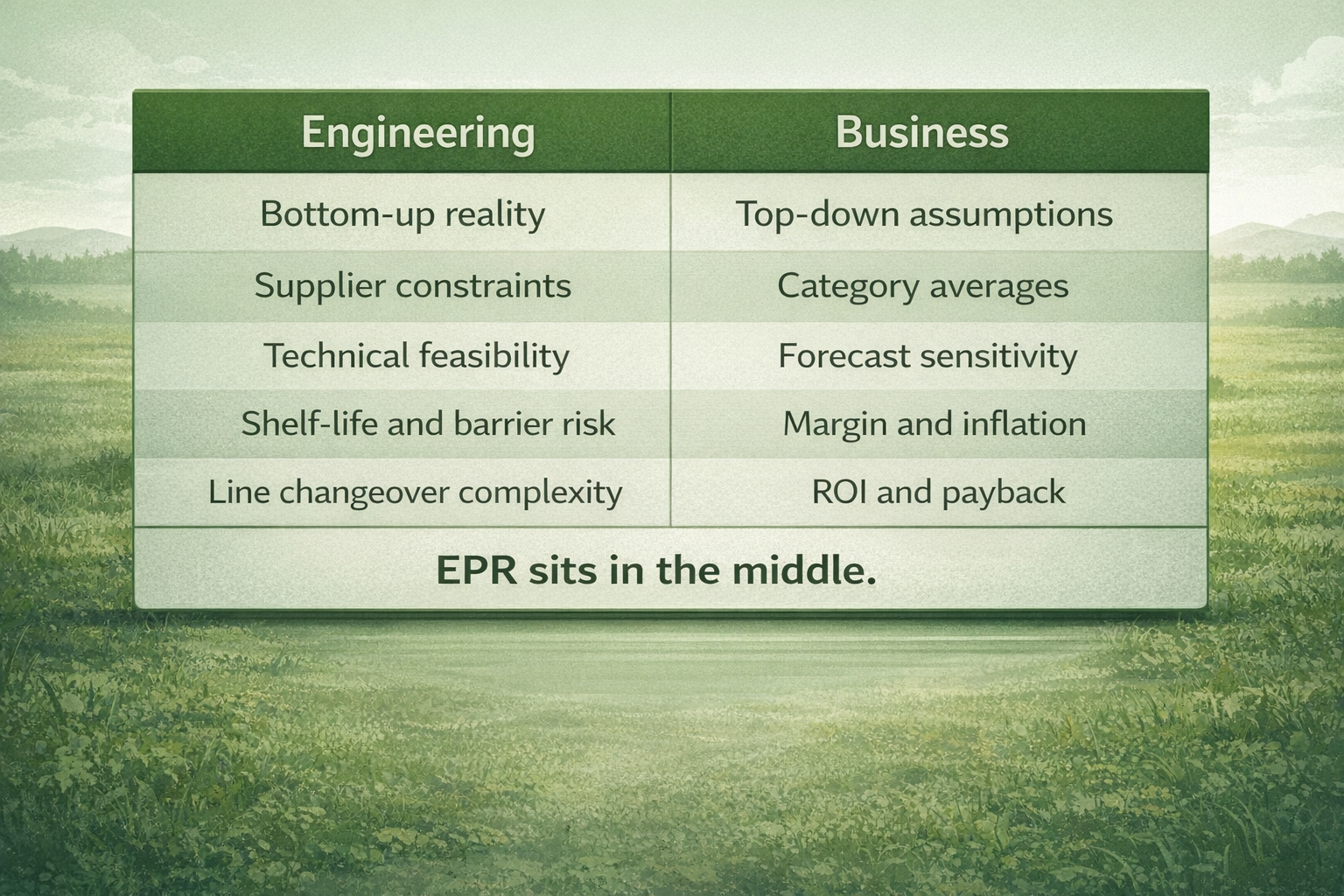
The gap between engineering and the business side is not new, but EPR widens and weaponizes it. Engineers design to specs. Business decisions are based on assumptions.
I've observed multiple CPG projects that leadership builds models to forecast savings from sustainable film transitions, leading to margin improvements. Leadership approves, but engineering then finds that the new film requires full-line retooling, limited vendor capacity, or barrier property trade-offs that introduce shelf-life risks unmodeled by the business case.
Meanwhile, engineering works bottom-up, based on machine specs, material properties, and supplier realities. Business planning works top-down, using category assumptions and historical benchmarks. Both are valid, but under EPR, their clash becomes costly.
The business doesn't just miss margin. It commits to a packaging pathway that becomes expensive, risky, and slow to unwind.
Business and procurement teams struggle to price packaging risk without input from engineering.
When asked to model EPR exposure for a new product launch, procurement and leadership will ask reasonable questions:
- What is the packaging weight?
- What are the materials?
- What is the rollout timing by state?
- Does this structure meet California's recycled content thresholds?
- Can we source certified rPET at this volume by Q3?
- Does shifting to mono-material compromise drop-test performance enough to increase damage rates?
When this disconnect grows, business exposure becomes significant. EPR penalties are swift and costly when designs fail legislative standards.
Procurement and leadership sometimes view engineering constraints as budget issues rather than technical limits. "Can't we find a cheaper supplier?" is a common response to a six-month lead time on a certified recycled resin. This friction is structural: the business must meet numbers; engineering must respect physical realities. EPR lies between them.
Elevating the Engineer's Role in EPR Strategy
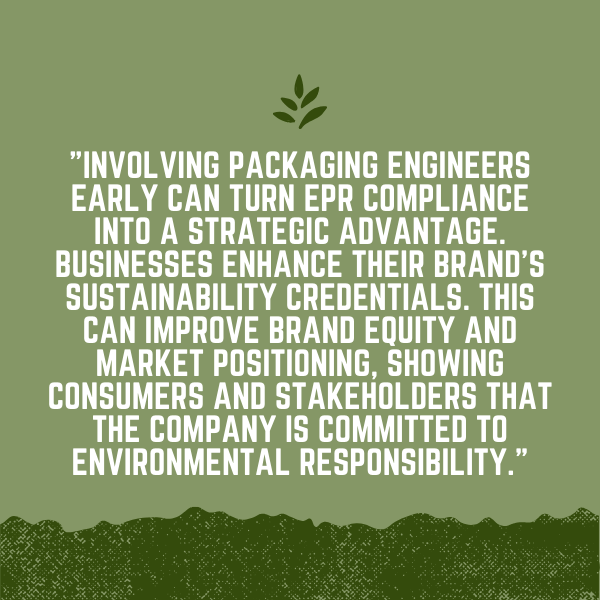
In my experience working across the packaging industry, engineers have always been positioned as technical problem-solvers: the ones who make things work, ensure structural integrity, and optimize performance. But EPR has fundamentally changed what "optimization" means, elevating engineers from executors to strategic partners. The shift happens when engineers start quantifying trade-offs in financial terms that leadership can act on.
Shifting conversations from compliance to cost.
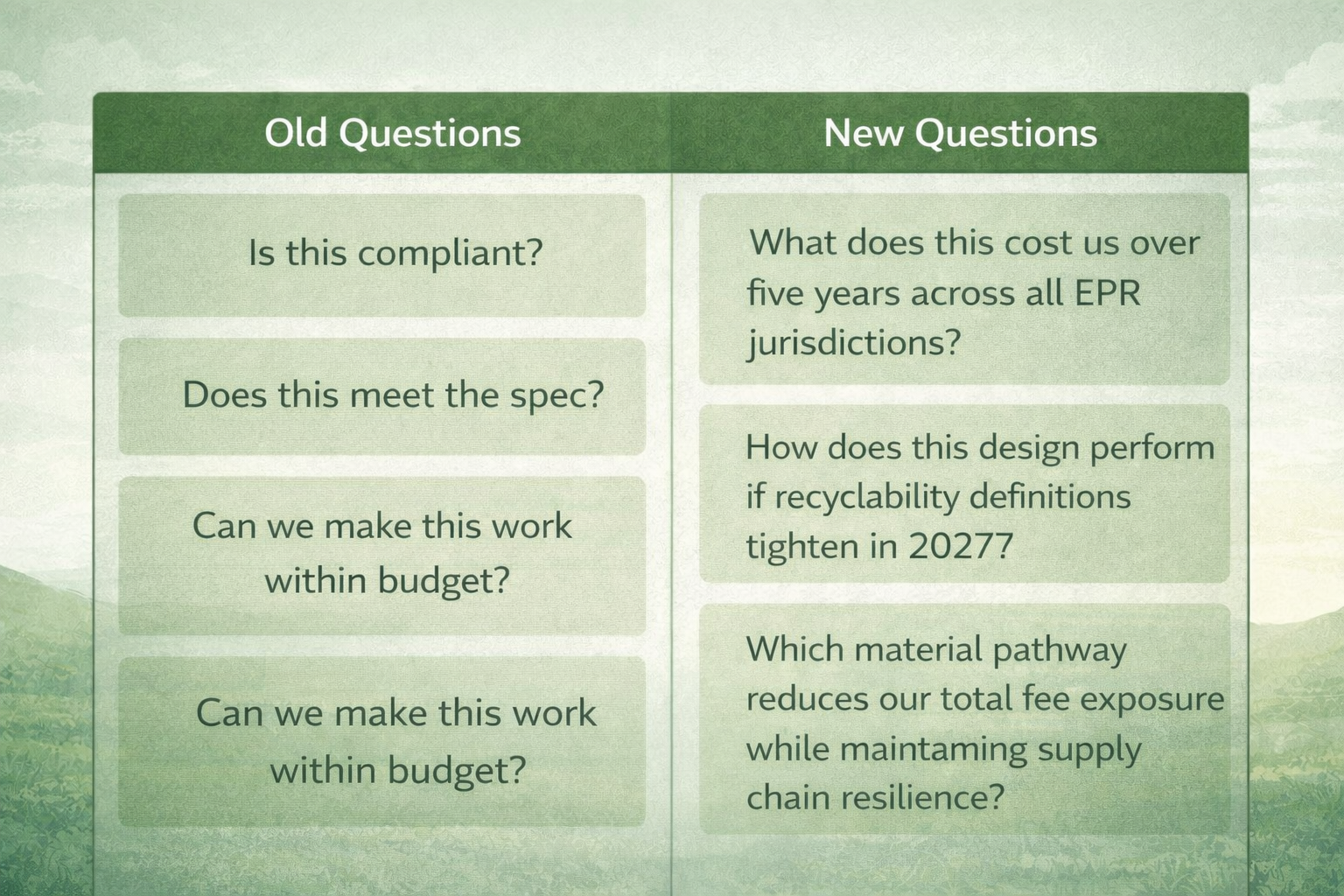
This shift from pass/fail compliance to scenario-based cost modeling is what separates order-taking engineers from strategic partners. It's also where the value proposition becomes undeniable.
The Growing Importance of Engineers in Business and Regulatory Planning
Engineers are increasingly being pulled into business and regulatory planning because they're the only ones who can bridge the gap between technical feasibility and commercial reality. They bring quantitative, data-driven methods to manage risk and ensure compliance; But more importantly, they translate those methods into business language that determines project viability and investment prioritization.
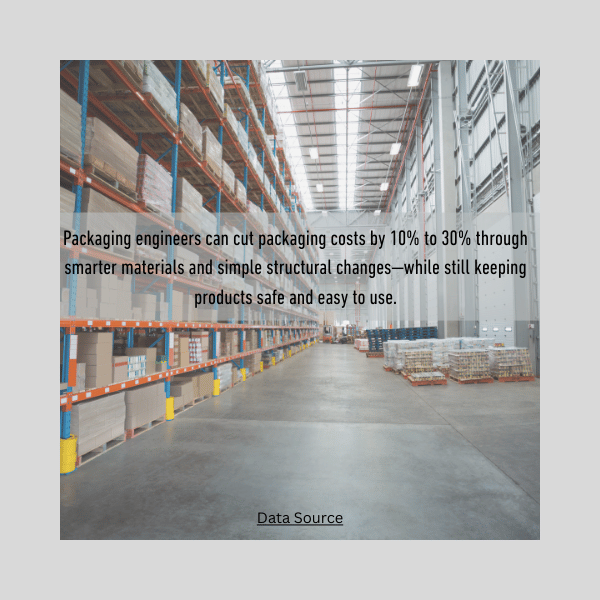
Under EPR, these engineering-driven savings are no longer just cost reductions. They're compliance leverage. Lightweighting reduces per-ton fee exposure. Simplified structures improve recyclability scores.
Material substitutions eliminate penalty tiers. The business case compounds: you save money on inputs, logistics, and regulatory fees.
The engineers who can articulate that compounding value - who can model it, defend it, and tie it to strategic outcomes - become essential voices in financial planning.
The Competitive Advantage of Engineers Who Can Translate Compliance Into Numbers Leadership Trusts
The packaging engineers who will thrive in the EPR era are those who understand that their technical expertise is most valuable when expressed in financial terms. Leadership doesn't need to know the technical specifications of rPET inclusion rates or the sortation challenges of multi-layer films.
What they need to know is:
- What does this cost us?
- What does it save us?
- What risk does it eliminate?
This ability to connect materials, mandates, and money isn't just a career advantage. It's becoming a prerequisite for senior-level engineering roles in CPG companies navigating EPR complexity.
Wondering How to Become a Strategic EPR Partner?
Here are three action steps you can take right now: - Creating a reputable source within your organization. It's a great way to stay up to date on evolving EPR regulations across multiple states in the USA. The source should be checked in at least once a week, changes tracked, and a company knowledge base created if you haven't already.
- The second action item you can take is actively identifying risks and opportunities in your business' supply chain, rather than just reacting to compliance deadlines.
- Finally, leverage technology for efficiency. Use advanced platforms to track material flows, optimize waste streams, and improve product recyclability. At my own company, we use a great tool you can use right now: AdeptEPR AI. The pilot program is built around consolidating all legislation, EPR knowledge, and regulations into a single, easy-to-use framework. It's free to use, and I use it myself when I am helping clients. The free version provides 10 questions a month and can be expanded if required.
Another feature includes key forecasting capabilities that enable companies to plan for the costs of pack components over the next decade, helping them accurately choose optimal EPR solutions.
Additionally, this tool creates CAA-ready reports.
The Future of Packaging Engineering Belongs to Those Who Can Connect Materials, Mandates, and Money
EPR has rewritten the rules of packaging engineering. Success is no longer just about making things work; it's about making things work profitably with an evolving regulatory landscape that financially penalizes outdated approaches. The future belongs to engineers who can:
- Model long-term cost implications of design decisions across multiple EPR jurisdictions
- Quantify the ROI of early compliance and proactive material transitions
- Translate technical constraints into financial language that CFOs and strategy teams trust
- Design for regulatory resilience rather than minimum compliance
EPR has made packaging engineering a business discipline. The engineers who embrace that shift will define the industry's next decade.
Contact us to learn more.
About the Author:
Timothy Waldron received his BSc in packaging engineering and economics from Rutgers and works for Adept Group specializing in packaging development, validation, and sustainability. With eight years experience spanning medical device and consumer packaged goods industries, he brings hands-on expertise in packaging test methods, regulatory considerations, and performance-driven design. He focuses on helping organizations improve packaging efficiency, compliance, and sustainability through data-driven strategies and emerging technologies such as AI-enabled specification management.